How to sell digital products made with AI
How to sell digital products made with AI: what people actually buy, how to build a prompt pack worth paying for, and Stan Store vs Gumroad vs Beacons.

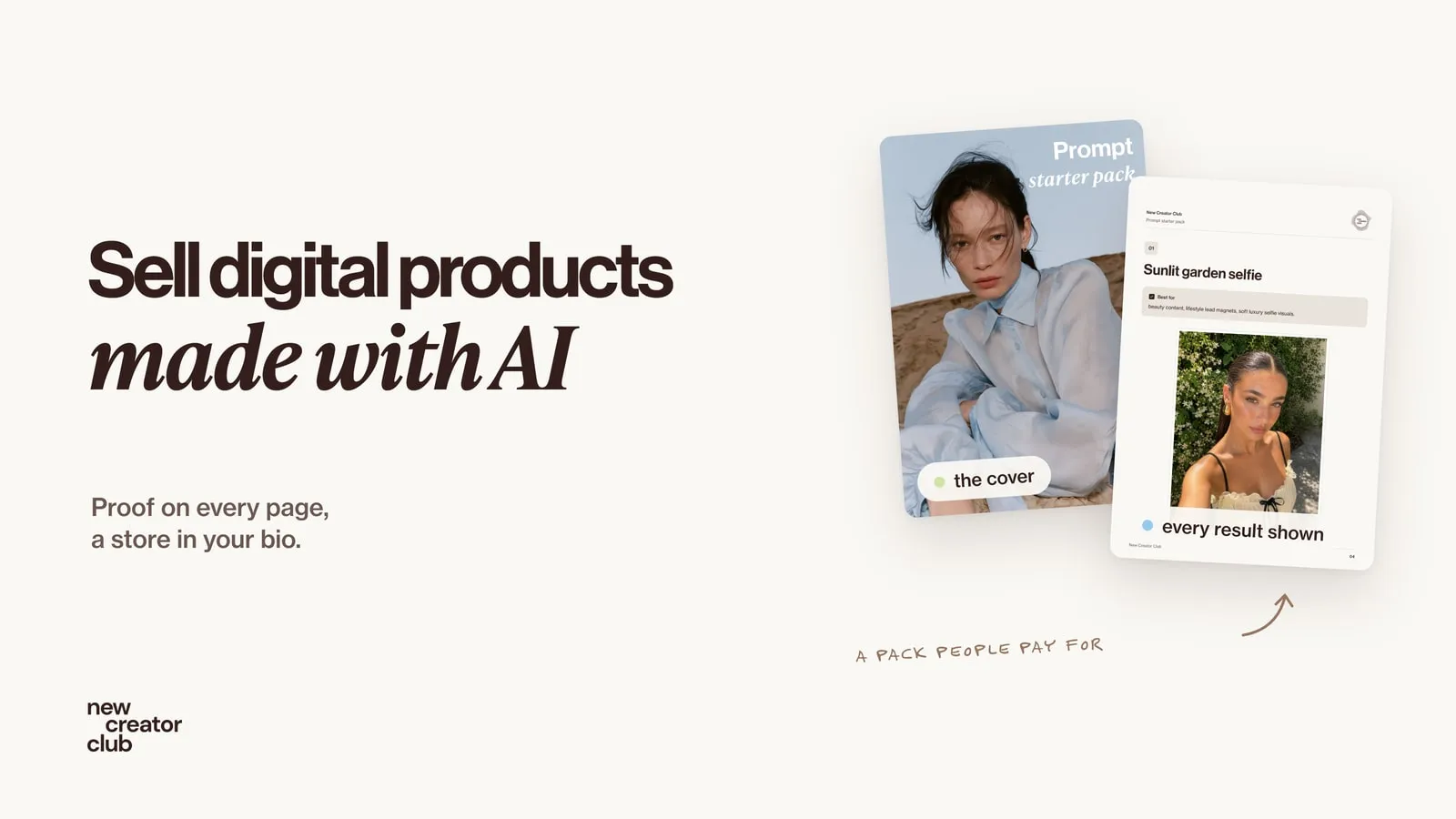
The digital products that sell are the ones that save someone time on a job they already have: prompt packs with results shown, templates, presets and art. Build one for one kind of buyer, show the results, write a clear licence, then sell it from a creator store such as Stan Store, Gumroad or Beacons.
AI made digital products easy to make, which is exactly why most of them don't sell. Hundreds of near-identical prompt lists go up every week. The ones that do sell solve one person's problem, show proof that they work and are easy to buy. This guide covers what people actually pay for, how to build a pack worth buying, and how to choose between Stan Store, Gumroad and Beacons.
What digital products made with AI actually sell?
People pay to skip work, not to own files. The products that sell best save a specific person time on a job they already do:
| Product | Who buys it | What makes it worth paying for |
|---|---|---|
| Prompt packs | Creators, small brands, freelancers | Every prompt shown with the picture it made, sorted by job |
| Style guides and presets | Creators who want a consistent look | One clear look, with before and after examples |
| Templates | Brands, coaches, social media managers | Ready to fill in: captions, ad scripts, content calendars |
| Art and prints | Shoppers and interior lovers | A strong theme, sized for real frames |
| Mini guides | Beginners | One result, step by step, in an afternoon |
The common thread: a clear buyer and a visible result. "100 AI prompts" says nothing; "Product photos for candle brands, with the result for each prompt" sells itself.
How to make a prompt pack people pay for
Our own free prompt starter pack is a working example of the format, and you can download it to see each page.
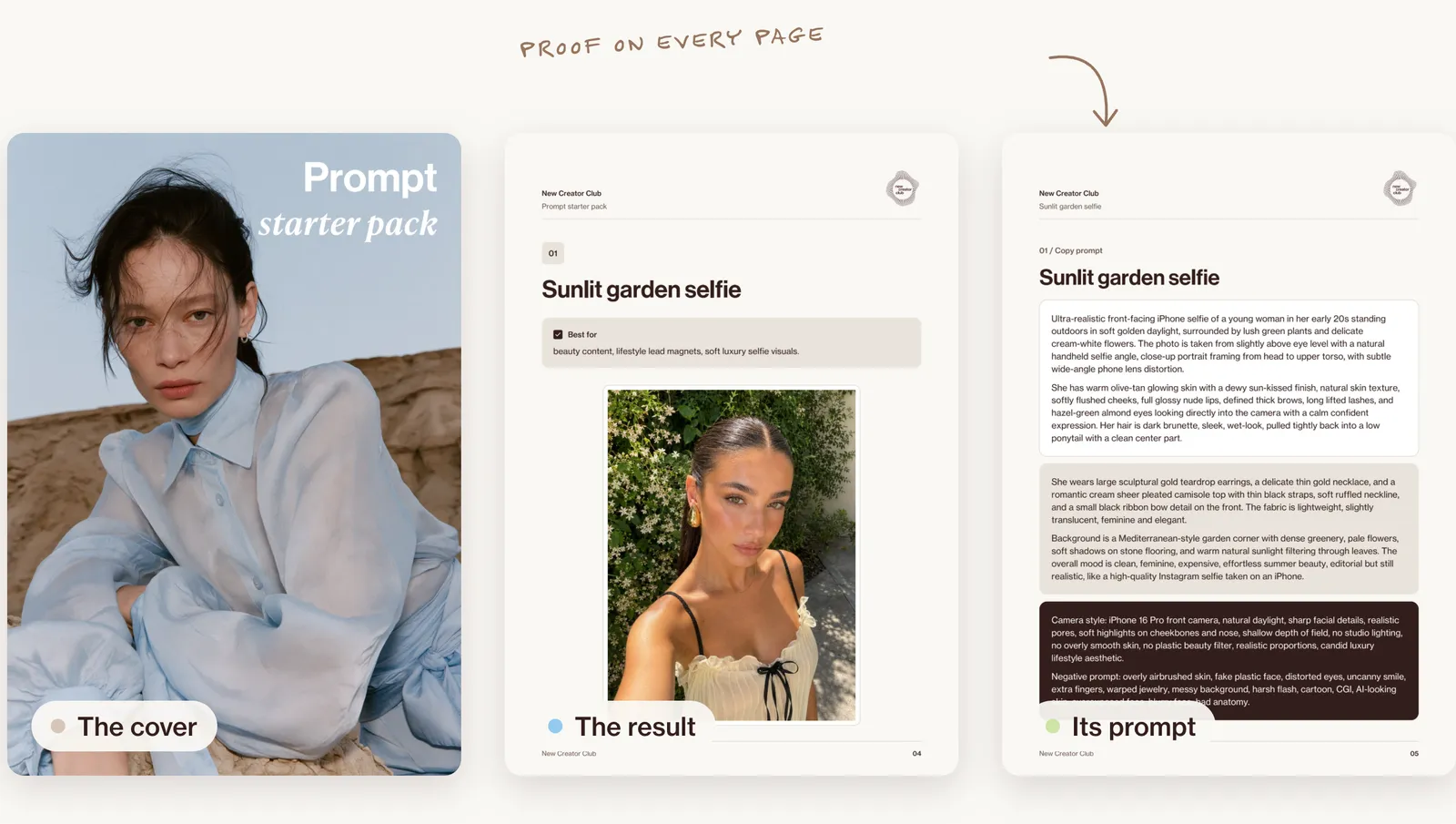
- Pick one buyer. "Etsy sellers who need lifestyle photos" beats "anyone who uses AI".
- Show every result. A prompt without its picture is a promise; with its picture, it is proof. Put them side by side.
- Sort by job, not by tool. Buyers search for "a flat lay for my candle", not "a Midjourney prompt".
- Explain how to change it. One page on swapping the product, the colours and the setting turns ten prompts into a hundred uses.
- Write a licence. Say plainly what the buyer can do: use the results in their own content and client work, but not resell the prompts.
- Use only your own prompts and pictures. Never repackage someone else's pack, and keep real brands, logos and people out of your examples.
For prompts that actually look good enough to sell, start with our guide to AI image prompts.
Use your face, or an AI avatar, to sell it
Digital products sell through content: a short video showing the result, a carousel of the pages, a story with a link.
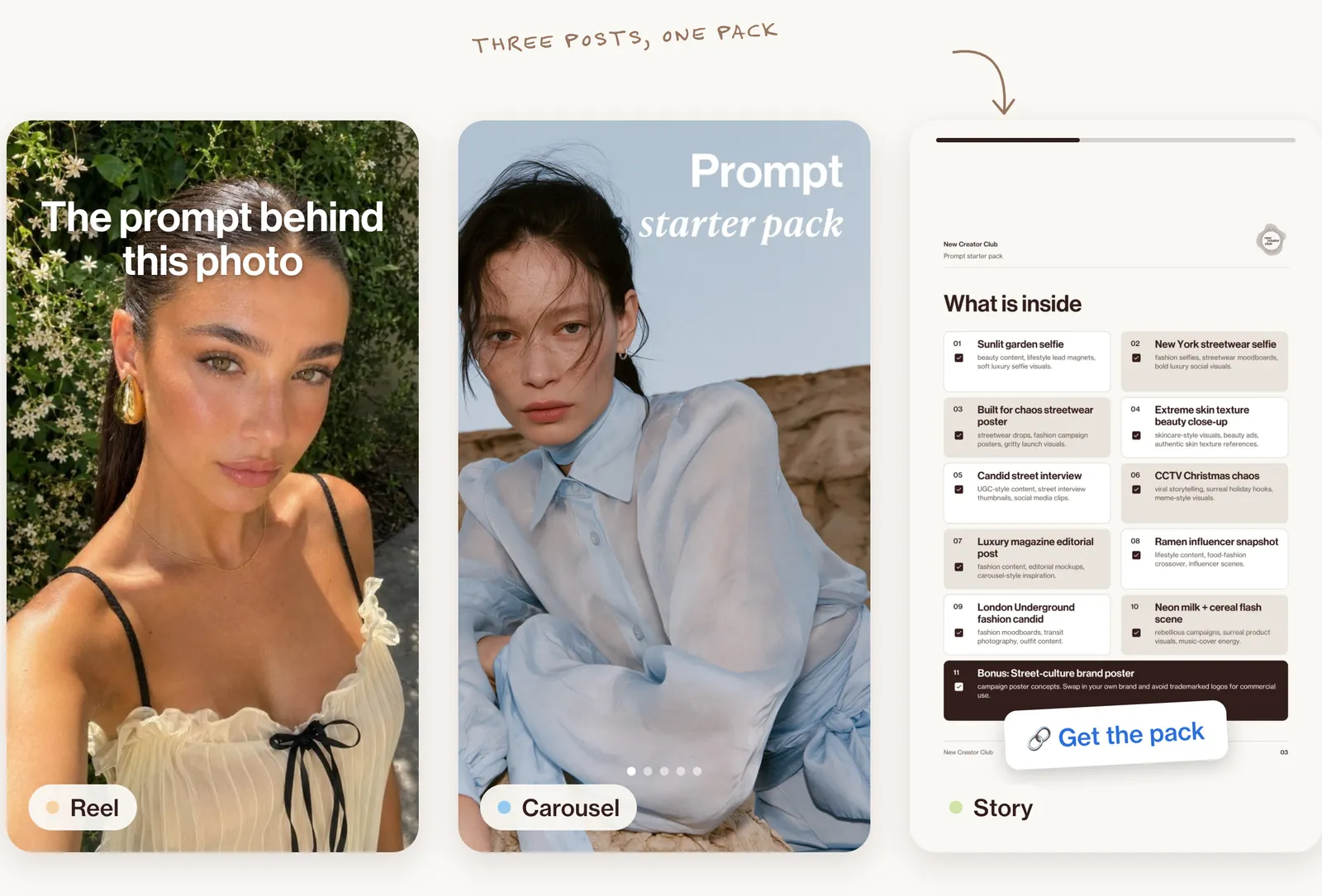
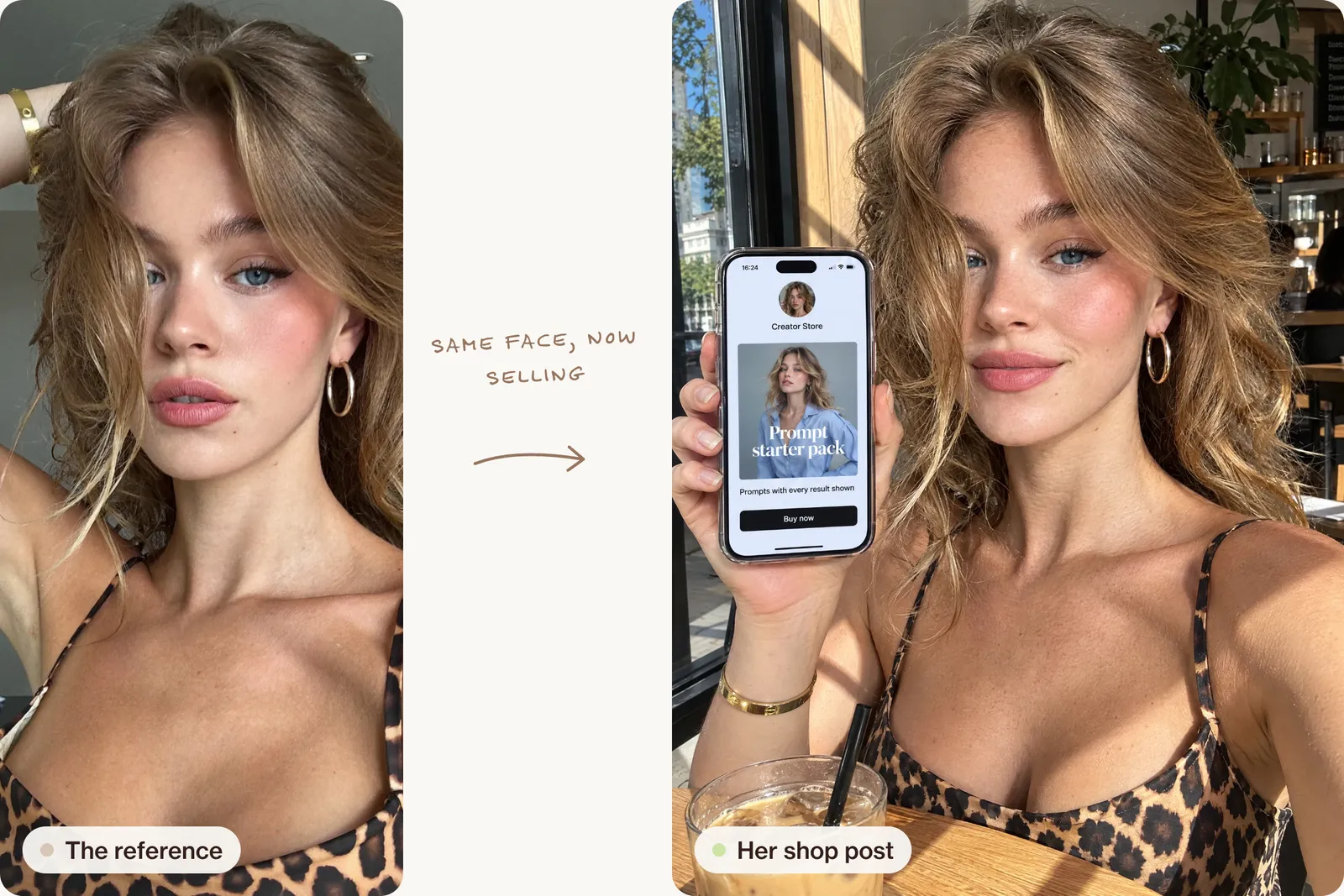
You can present them yourself or, if you don't want to be on camera, let an AI avatar present them, as long as she is labelled as AI. Our guide on how to create an AI influencer shows how to build one with a consistent face.
Where to sell: Stan Store vs Gumroad vs Beacons
All three let you sell downloads from a link in your bio. They differ in how they charge and whether they bring you buyers.
| Stan Store | Gumroad | Beacons | |
|---|---|---|---|
| How it charges | A monthly plan, with no fee on each sale | No monthly fee; a cut of each sale, and a bigger cut when its marketplace finds the buyer | A free plan that takes a cut of each sale, or paid plans with no sale fee |
| Brings you buyers | No, your audience is your traffic | Yes, through its Discover marketplace | No, your audience is your traffic |
| Best for | Creators who already sell regularly from Instagram or TikTok | Testing a first product without a monthly bill | A free link-in-bio page with a shop, email and more in one place |
Card processing fees come on top on every platform. Fees change, so check each one's pricing before you choose: Stan Store, Gumroad and Beacons.
A simple rule of thumb: start where you pay nothing until you sell, and move to a monthly plan once your sales make the fees add up.
What you can't sell
- Other people's prompts or packs, even reworded.
- Real people's faces or names without their agreement, including celebrities.
- Other brands' logos and products in your examples.
- Promises you can't keep. Show what the prompts make; don't promise followers, sales or income.
One more thing to know: in the US, purely AI-generated images generally can't be registered for copyright, according to the US Copyright Office. Your buyers pay for your selection, your structure and your know-how, so put those front and centre.
Checklist before you launch
- One buyer, named in the title
- Every prompt shown with its result
- A page on how to adapt the prompts
- A clear licence
- Three pieces of content that show the result
- A store you've tested from your phone, start to finish
FAQ
Can you sell digital products made with AI?
Yes. Most creator stores allow AI-made products. Be honest that AI was used, only sell what you made, and keep real brands and people out of it.
What is the best digital product to sell with AI?
The one that solves a specific problem for a specific buyer. Prompt packs with results shown are a strong start because the proof is built in.
Stan Store or Gumroad?
Gumroad if you're testing your first product and want to pay nothing until you sell. Stan Store if you already sell from social media and want a monthly plan with no fee on each sale.
How many prompts should a pack have?
Enough to cover one job well. Ten great prompts with results beat a hundred without.
Go further
A pack is only as good as the pictures it makes. Inside New Creator Club you learn the prompts, tools and workflows behind images worth selling, from first idea to finished campaign. Start creating.
Keep reading
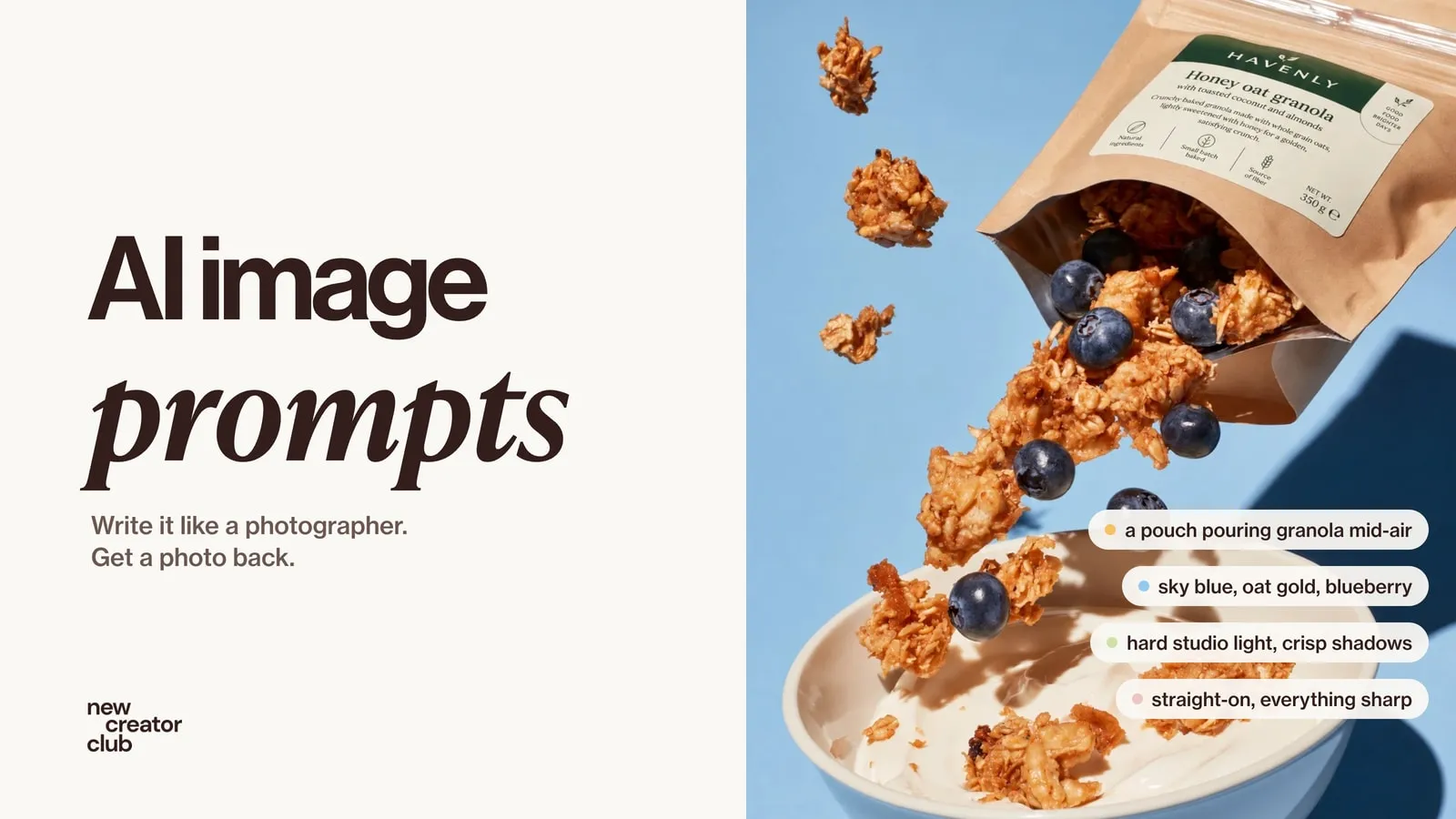
AI image prompts that look like real photos
Write AI image prompts that read like real photographs: an eight-part formula, with original prompts for portraits, products, UGC and editorial.
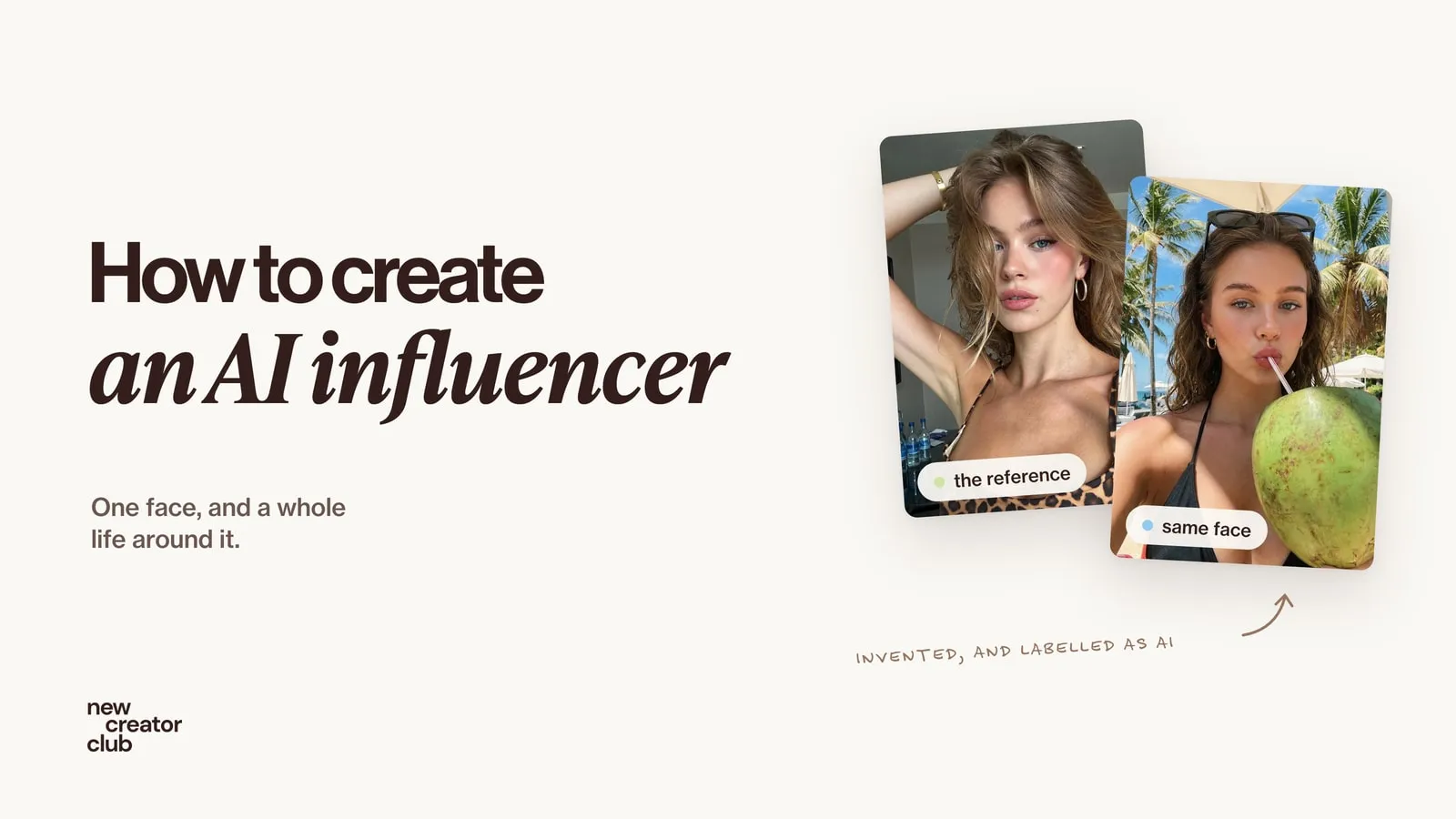
How to create an AI influencer people actually follow
How to create an AI influencer step by step: design one face, keep it the same in every scene, give her a believable life online, and label it honestly.
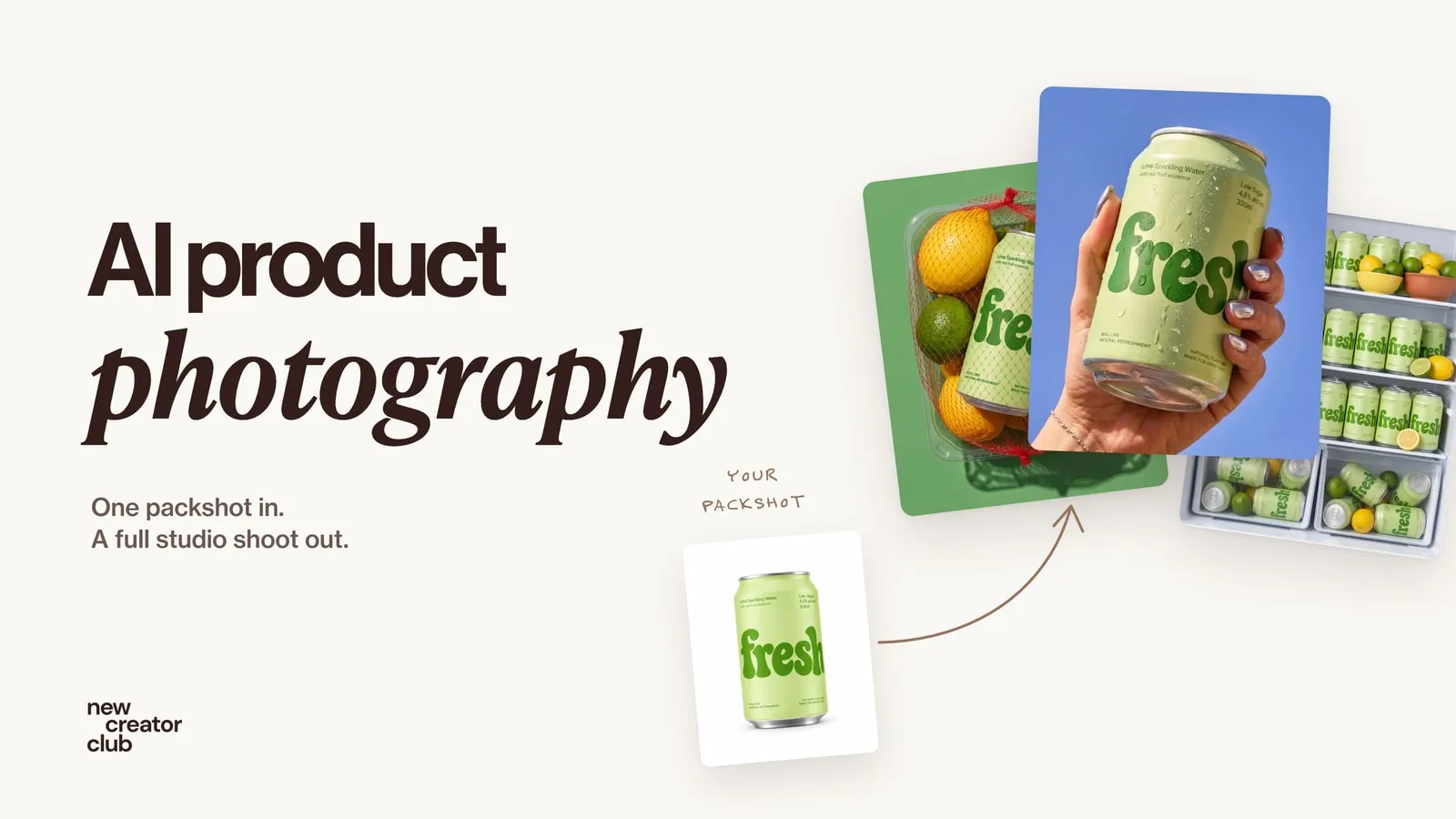
AI product photography: one packshot, a full studio shoot
AI product photography from one packshot: a full studio shoot that keeps the label and colours true, with a worked example, the prompts and the checks.